The mission of MOBILISE is to accelerate the transition to a more sustainable and inclusive mobility system. We analyse mobility to assess the external costs of transport and the impact of new policies and technologies on the transport system, the society and the environment. We mobilise people to create awareness of the issues caused by transport, to involve them in the planning and evaluation of the transport system and to accelerate the transformation and change behaviour.
We focus on two main research tracks: urban mobility and sustainable logistics


Over the years, MOBILISE has developed several methods and tools to accelerate the sustainable transition of cities:
- participatory planning and impact assessment tools such as the multi-actor multi-criteria analysis (MAMCA) and the Stakeholder-based Impact Scoring (SIS);
- the External Cost Calculator;
- transport models for freight such as SYMBIT and TRABAM;
- a toolbox of stakeholder and citizen engagement methods for participatory planning;
- the participatory foresight tool Cross Impact Scenario Policy analysis (CRISPA).
Recent news
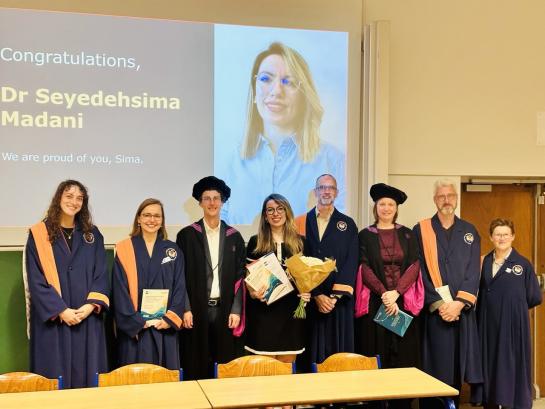
Seyedehsima Madani Defended Her PhD on Intelligent Hybrid Transit Systems through Integrated Design and Machine Learning–Enhanced Optimization
On 9 October 2026, Seyedehsima Madani successfully defended her PhD at the Vrije Universiteit Brussel (VUB), as part of a joint doctoral programme with Hasselt University (UHasselt), with her dissertation entitled “Toward Intelligent Hybrid Transit Systems: Integrated Design and Learning-Enhanced Op...

Upcoming events
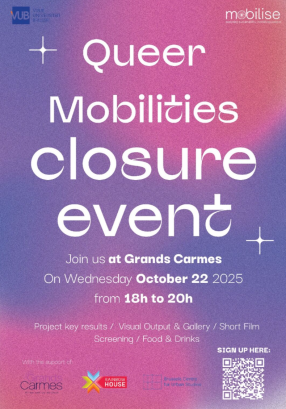 Practical info22/10/2025 - 18:00 - 22/10/2025 - 20:00
Final Event of the Queer Mobilities Project
PhD researchers Charlotte van Vessem and Juliana Betancur Arenas at Mobilise (Vrije Universiteit Brussel) have been working on a Brussels Centre for Urban Studies-funded research project about queer mobilities in Brussels. In this research, they look at where queer people (don’t) go, how they travel and how their mobility patterns interact with their queer identity.
